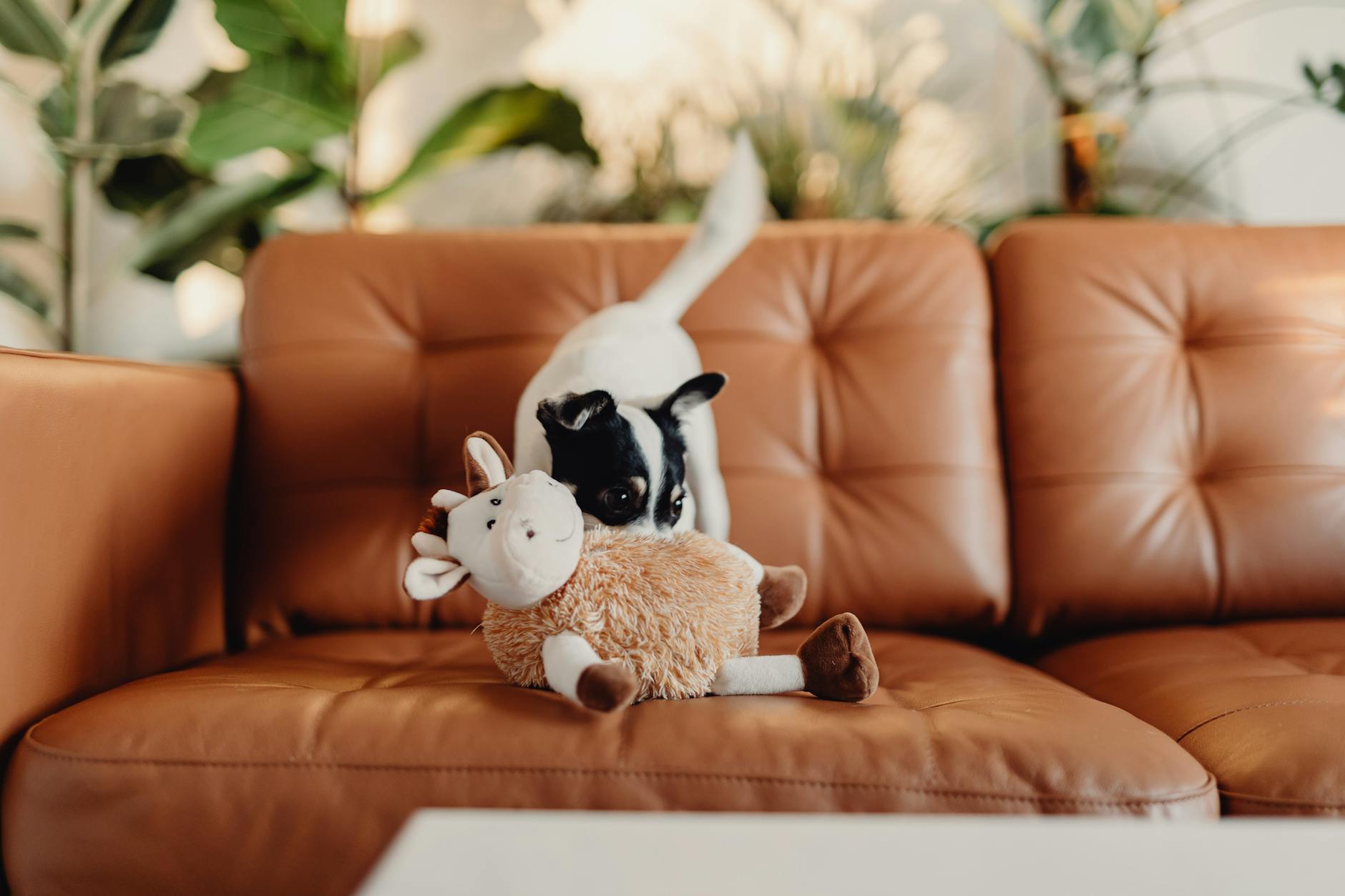
The easy way to deal with dogs who take, eat, or destroy your kid’s stuff…
When it comes to dogs stealing kid’s toys, it can seem like there is no easy solution. Your dog is having fun, your kids are sad and miserable, and their stuff is getting destroyed (or slimy).
Dogs are naturally curious and playful, which means kids’ toys can look like irresistible treasures. But constant toy thievery can lead to frustration, messes, and even safety concerns.
Here’s how to teach your dog to leave the kids’ toys alone without causing stress for everyone in the house.
1. Understand Why is Your Dog Stealing Kid’s Toys
Before correcting the behavior, it helps to know the reason behind it. Dogs often “steal” toys because:
- They’re bored. Dogs need mental and physical stimulation, and grabbing toys gets lots of attention.
- They’re confused. Many kids’ toys look, sound, and smell just like dog toys, especially stuffed animals and squeaky things.
- They want attention. Even negative attention can reinforce the behavior.
- They’re teething or seeking comfort. Chewing helps soothe stress or boredom.
- They like to rip and destroy. This is a normal, fun, dog behavior, even though it can be challenging for you and your kiddos.
Once you know why your dog is stealing kid’s toys, you can create a plan that fits your dog’s personality.
Note: Some dogs eat stolen items. If your dog eats non-edible things, you will need to manage them very carefully to prevent a bowel obstruction or other health concern.
2. Keep Kid’s Toys Clearly Separated
The simplest fix for dogs stealing kid’s toys is prevention, and consistency is key. You need to first stop your dog from getting to the toys. Eventually, this will help your dog learn which toys are theirs.
- Put toys away. Store kids’ toys in bins with lids or on shelves that your dog can’t reach.
- Separate play spaces. Gate off your kid’s play space so that the dog can’t go in. That way, you don’t need to worry if your kids don’t clean up!
- Find things your dog can destroy. Cabbage is a good, edible option, but many dogs do fine ripping cardboard or paperboard (as long as they are supervised).
- Teach the difference. When your dog goes for a kid’s toy, calmly say “Leave it,” and redirect them to their own toy. Reward them when they make the right choice.
Give your dog a variety of different toys. It can help to include options that are similar to what they want to steal (soft squeaky toys for dogs who steal stuffed animals). If your dog destroys or eats toys, your options are limited, but try to have a few different styles/textures.
3. Reinforce the Good Behavior (Not the Bad)
Instead of scolding your dog, focus on positive reinforcement.
- Praise and reward your dog every time they play with their own toys.
- Praise and reward your dog for looking at or noticing the kid’s toys. As long as your dog hasn’t grabbed a forbidden item, you can give them a treat for leaving it alone.
- Ignore minor infractions. If your dog grabs a toy and runs, avoid chasing them. It turns into a game.
- Use trade-offs. Offer a treat or a favorite dog toy in exchange for the stolen item. Say “Drop it,” and when they do, praise them and give the reward.
Over time, your dog will associate leaving kids’ toys alone with good things.
4. Tire The Dog Out (Mentally and Physically)

A tired dog is a well-behaved dog.
- Add more walks or play sessions. A few extra minutes of fetch or tug can reduce mischief.
- Try enrichment toys. Puzzle feeders, snuffle mats, and treat-dispensing balls keep dog’s brains busy.
- Rotate dog toys. Changing up their toy selection every few days keeps them interested in their stuff, not the kids’.
It’s also okay for your dog to go in their crate or behind a gate when it’s time for rest. This ensures that they don’t get an opportunity to start stealing kid’s toys while you are busy.
5. Involve the Kids
This is a family effort!
- Teach children to put toys away when they’re done playing.
- Encourage them to play with the dog appropriately using dog-safe toys only.
- Teach kids to praise the dog for playing with the right toys.
- Practice what you want kids to do when the dog has something of theirs.
When kids understand the rules, it’s easier to keep the household harmonious.

6. Be Patient and Consistent
Behavior change doesn’t happen overnight. Keep training sessions short and positive, and stay consistent with your rules.
Remember: The more that you are able to prevent the dog from stealing the kid’s toys, the faster the process will be. Use crates or gates to separate your dog from kid’s stuff, or keep your dog on leash while she’s learning.
🐶 Final Thoughts
Dogs don’t steal toys to be “naughty,” they’re just being dogs. With patience, structure, and a bit of creativity, you can teach your pup to respect your kids’ playtime while still having plenty of fun of their own.
A few weeks of training can save you countless chewed dolls, broken blocks, and family frustration, making for a happier home for both your kids and your pup.
Need help getting your dog to stop? Contact me to get started!


Leave a Reply