Bringing a new rescue dog into your family is an exciting and meaningful decision. Your kids are likely excited, curious, and overjoyed to be welcoming a brand-new best friend into their home.
Getting your new dog and kids off on the right foot can help them bond and keep them safe. But the first month is often a time of transition and often stress for a new dog. Setting realistic expectations will help everyone—kids, parents, and pup—settle into a happy rhythm together.
Here are some things to keep in mind during those first few weeks:
1. New Rescue Dogs take Time to Adjust
Rescue dogs come with their own stories.
One of the most common stories is one of under-socialization: the dog was never abused or neglected, he just never left his house. This typically shows up in fears or anxieties over normal everyday experiences.
The under-socialized dog may overreact to a plastic bag blowing in the wind or a person wearing a hat. The dog may bark, cower, or try to get away. It takes some time and patience to get them used to their new normal.
Don’t expect instant cuddles or perfect behavior from your new rescue dog. Your dog may pace, hide, bark, or seem unsure. That’s normal. A quiet environment, predictable routines, and gentle patience will help them start to feel safe.

2. The “Decompression Period”
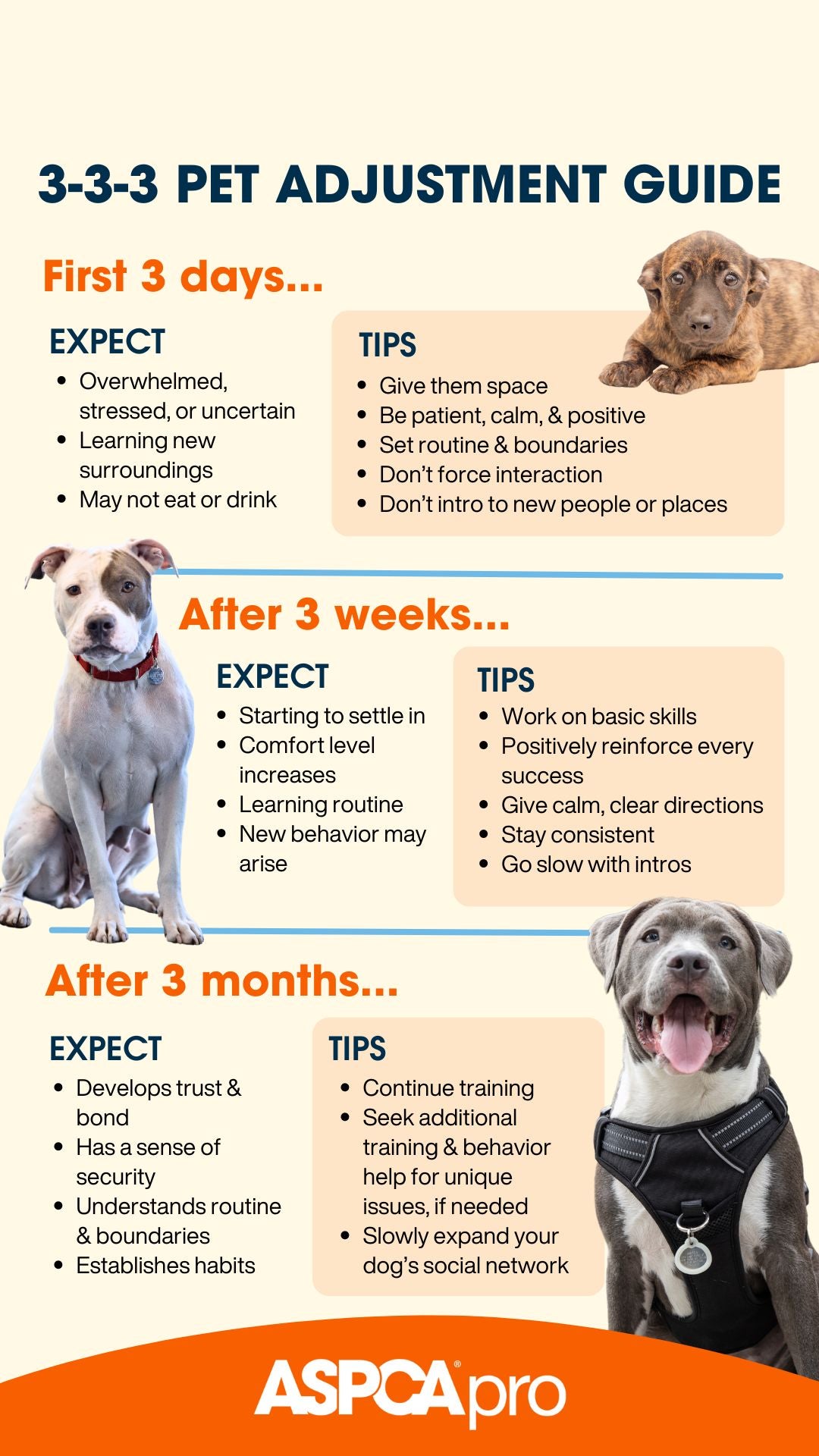
Many shelters and trainers talk about the “3-3-3 rule.” This can be a good thing to keep in mind during your first month with a new rescue dog. In general, it takes a dog:
- 3 days to begin feeling safe enough to rest. Some dogs may be MORE hyper and wound up because they are tired.
- 3 weeks to learn your family’s routines.
- 3 months to truly settle in and show their full personality.
For kids, it helps to frame this like giving your new friend “quiet time” to learn their new home. Just like your kid would want time to get comfortable on the first day at a new school, the dog needs time to warm up.
3. Boundaries for your New Rescue Dog (and Kids)
Dogs need to know what’s expected of them. It’s important to agree on the rules and stay consistent as a family. Establish rules right away:
- Where the dog is allowed (bedrooms, couches, etc.).
- How to approach the dog (no hugging, no climbing, and let the dog come to you).
- What’s off-limits (food bowls, beds, and crates should always be safe zones).
- What games are acceptable to play with the dog. (here are some ideas)
Being proactive about the rules not only builds trust with your dog but also keeps your children safe.
Never assume that just because the shelter says your new rescue dog is okay with kids, that he will be fine in every situation. Dogs are living creatures that often react in predictably unpredictable ways.
Remember: Your dog is figuring out the expectations. Instead of scolding the dog for doing something wrong, show the dog what you want them to do.
4. New Routines Help Everyone
Dogs (and kids) thrive on predictability. Set up a little bit of structure to help everyone know what comes next, especially around:
- Meal times.
- Leaving the house. Include a treat for the dog.
- Bathroom breaks on a regular schedule.
- Walks and playtime to burn energy.
Invite kids to participate in these routines, measuring food, refilling water bowls, or walking alongside you. It makes them feel included and teaches responsibility.
5. Training a New Rescue Dog Is a Family Affair

Even if your rescue dog knows basic training skills, they’ll need to practice them in a new environment.
In the first month, focus on using lots of positive reinforcement (treats) and keep training sessions short and fun.
Involving kids in the process can be fun and rewarding. Training is a great way to bond with a new dog, and it teaches kids empathy and leadership skills!
6. Expect Surprises (not always the good kind)
Shelters are stressful places, and getting a good read on a dog’s personality in a meet and greet can be challenging.
The dog who seemed calm at the shelter may turn out playful. The one who was shy might reveal a goofy side.
Moving to a new home can bring out behaviors like chewing, potty accidents, or barking. Don’t panic, these are common first-month bumps. Consistency, patience, and sometimes the guidance of a positive reinforcement trainer can work wonders.
7. Celebrate Small Wins
Did your dog finally nap on the couch instead of pacing? Wag their tail at a formerly scary family member? Sit politely before being fed? Those are huge milestones! Point them out to your kids so they learn to appreciate progress, not perfection.
Final Thoughts
The first month with a new rescue dog is a time of adjustment for both your pup and your family. There may be challenges, but there will also be unforgettable moments of connection as trust begins to grow. With patience, structure, lots of love, and treats, your rescue dog will start to feel like they’ve truly found their forever home.


Leave a Reply