And What You Can Do to Keep Everyone Safe
The first step to preventing a dog bite is knowing when (and whether) your dog is uncomfortable around toddlers. 2/3 of children who are bitten by dogs in the U.S. are under 5 years old, according to the National Library of Medicine.
Toddlers and young preschoolers usually have happy, healthy, safe relationships with their dogs, but the risks must be taken seriously.
Even the friendliest dog can become overwhelmed, anxious, or uncomfortable, especially around active, unpredictable toddlers.
As a dog trainer, I’ve seen how subtle signs of discomfort can be overlooked until a dog “suddenly” growls, snaps, or bites. The truth is, dogs almost never bite without warning, we just don’t always know how to read the warnings.
🚩 1. Avoidance or Hiding
If your dog moves away from toddlers, hides under furniture, or seeks out quiet spaces, don’t laugh it off! This is a strong sign they’re not comfortable. Dogs who feel safe and relaxed don’t feel the need to escape.
Watch for:
- Leaving the room when children approach.
- Hiding under beds, tables, or in crates.
- Moving behind an adult to avoid a toddler.
- Refusing to engage with the child, even if the child is trying to interact.

🚩 2. Freezing or Tensing Up
If your dog suddenly becomes very still or stiff when a toddler is nearby or touching them, step in. This “freeze” response is often an immediate precursor to a growl or bite. It is the last thing that a dog will do before biting a child.
Watch for:
- Body going rigid.
- Holding breath or shallow breathing.
- Ears pinned back, tail still or tucked.
🚩 3. Whale Eye (Showing the Whites of the Eyes)
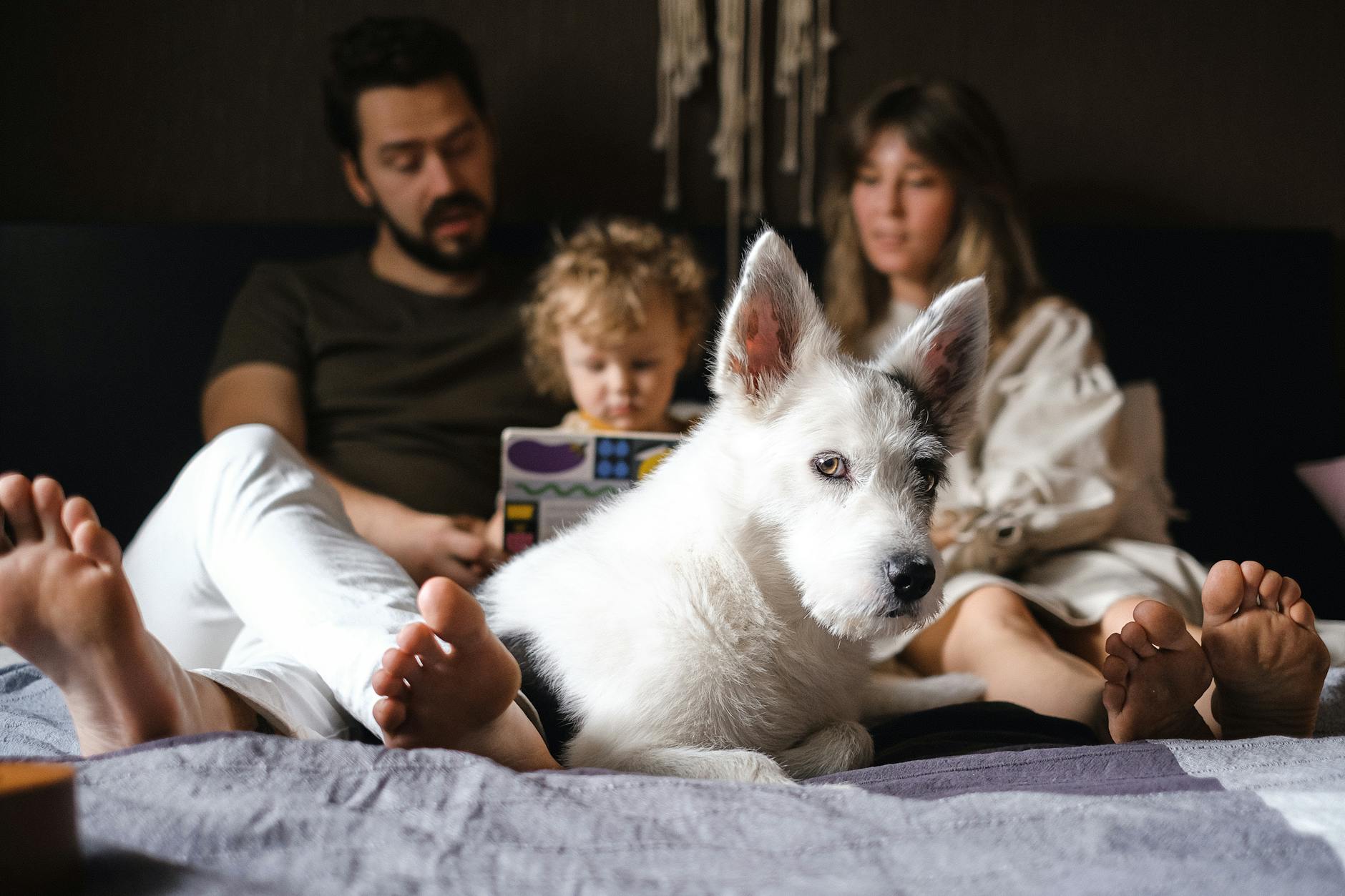
“Whale eye” is when a dog turns their head away but keeps their eyes on the toddler, exposing the white of their eye. It’s a subtle but important signal that your dog is uncomfortable.
Watch for:
- Head turned away, eyes wide.
- Whites of the eyes showing in a half-moon shape.
- Often paired with tension, stiffness, or freezing.

🚩 4. Growling, Lip Lifting, or Snapping
These are more obvious signs of discomfort that parents and even older children can spot easily. Even your toddler can recognize these signs on his own. Though growling or showing teeth are scary, the biggest thing you can do is never punish a dog for growling.
Growling is a warning, not an act of aggression. If your dog growls at a child, they’re trying to communicate a boundary. If we punish growling, then the next time the dog is uncomfortable around toddlers, they may just skip to biting.
Watch for:
- Low growling or grumbling.
- Lifting lip or showing teeth.
- Air snapping (a bite that doesn’t make contact).
🚩 5. Excessive Yawning, Licking Lips, or Panting
These stress signals are often misinterpreted or missed completely. These are all normal things that dogs do that can also be signs of stress. The key is to notice whether these behaviors show up suddenly, often, or accompanied by other signs of stress.
Watch for:
- Yawning when not tired.
- Licking lips, nose, or the child repeatedly or excessively.
- Panting when not hot or after exercise.
What to Do If You See These Signs
If your dog is showing signs of discomfort around kids:
✅ Create safe space: Give your dog a quiet, toddler-free zone where they can rest without being bothered. Encourage them to spend time there.
✅ Supervise all interactions: Never leave dogs and young children alone together, even for a moment.
✅ Teach kids respectful behavior: Show children how to interact gently, avoid hugging, and let the dog come to them.
✅ Work with a qualified trainer: A professional can help you build your dog’s comfort and manage any risky behaviors before they escalate.
Final Thoughts
Your dog communicates through body language, and it’s your job to listen. The earlier you recognize signs that your dog is uncomfortable around toddlers, the safer your dog and kids will be.
If you’re concerned about your dog’s behavior around toddlers, don’t wait for it to “fix itself.” Reach out, I’m here to help!


Leave a Reply