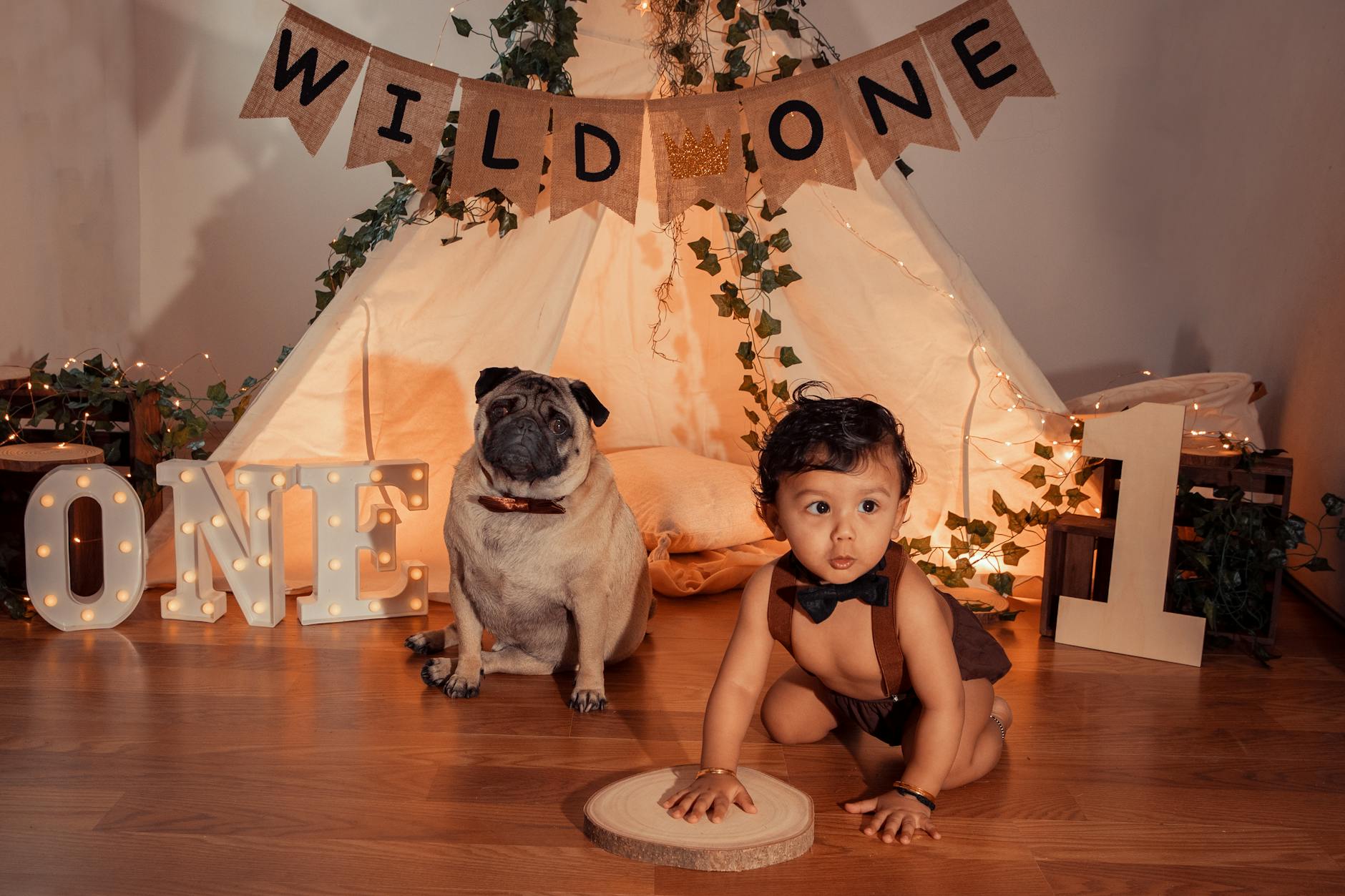
Toddlerhood is a challenge for many dogs, especially an anxious dog. Even if they do amazing with your newborn or infant, a newly mobile toddler may catch them by surprise. Maybe you are trying to prepare your spicy pup for the rocky road of learning to crawl, walk, and run. Or maybe you have seen some warning signs, and are looking to help your dog recover.
Bringing a toddler and an anxious dog together can feel overwhelming, but with patience and the right approach, they can build a safe and loving relationship. Here are 7 practical steps to help your nervous pup feel more comfortable around your little one.
What your anxious dog sees

From a dog’s eye view, toddlers are often scary or frustrating because they are unknown, unpredictable, and disruptive.
Think about this: Most dogs haven’t had many interactions with the 0-3-year old crowd. These kiddos are often in strollers or held by adults when they do interact with dogs. Some toddlers might even touch a dog briefly, but most prefer to watch unfamiliar dogs from a distance.
Toddlers move wildly, fall frequently, grab anything within reach, and act very different from older kids.
Because of this, your toddler is an entirely new experience for your dog. Give your dog some grace as they try to figure things out.
1. Create Safe Spaces
Give your dog a quiet retreat where they can relax without toddler interaction. A crate, bed, or gated room helps them decompress and prevents overwhelm.
Using gates or playpens can be a great way to let your anxious dog observe the toddler (without interacting). This gives them a essential opportunity to get used to the way toddlers move and act!
2. Teach Toddler Boundaries Early
Even young toddlers can start to learn simple rules like gentle hands, no pulling, and don’t disturb the dog while eating or sleeping. Bonus: having a dog will help your toddler grow into a kinder, more compassionate little person! Check out this article to see how pets can help children’s development.
3. Teach your anxious dog to get away
Not every anxious dog is going to be BFF’s with a toddler, and that’s ok! Your dog can still be safe around toddlers.
Every dog, but especially an anxious dog, should know that they can always leave an uncomfortable situation. Helping your dog learn to get away can prevent dog bites. Here are some ways to help your dog learn to escape:
- Praise and treat your dog when they walk away from kids
- Do not let your toddler follow the dog
- Don’t give your dog treats for staying in a bad situation. Instead, any time your toddler does anything your dog dislikes, throw a treat away so your dog can escape and get it.
4. Pair Your Toddler with Positive Experiences
When your toddler is nearby, give your dog treats, praise, or toys. Teach your toddler to “train” the dog by throwing them treats or dog food. Go for walks or fun outings with the toddler (as long as they won’t make your dog more anxious).
Over time, your dog begins associating the toddler with good things.

5. Watch Your Dog’s Body Language
Look for early stress signals like lip licking, yawning, turning away, stiff posture, or tucked tail. Respect these signs and give your dog space.
Find more dog body language hacks geared toward toddlers here!
6. Practice Calm Exposure
If your dog is anxious around toddlers, don’t start training while your kiddo is wild! Start with short, calm moments together. Build short, gentle moments of friendship building between your dog and your kid. Gradually increase time as your dog shows comfort and confidence.
7. Reinforce Calm Behavior
Whenever your dog behaves calmly around your toddler—lying down, sniffing gently, or simply relaxing—reward them with praise or treats. Make sure to reinforce your child’s good behavior around the dog too!
Remember:
Never force interactions. Your dog and toddler are both learning, and progress may take time. With consistency and supervision, many anxious dogs can learn to feel safe—and even affectionate—around toddlers. ❤️
Have you introduced your dog to a toddler? Share your experience below!


Leave a Reply