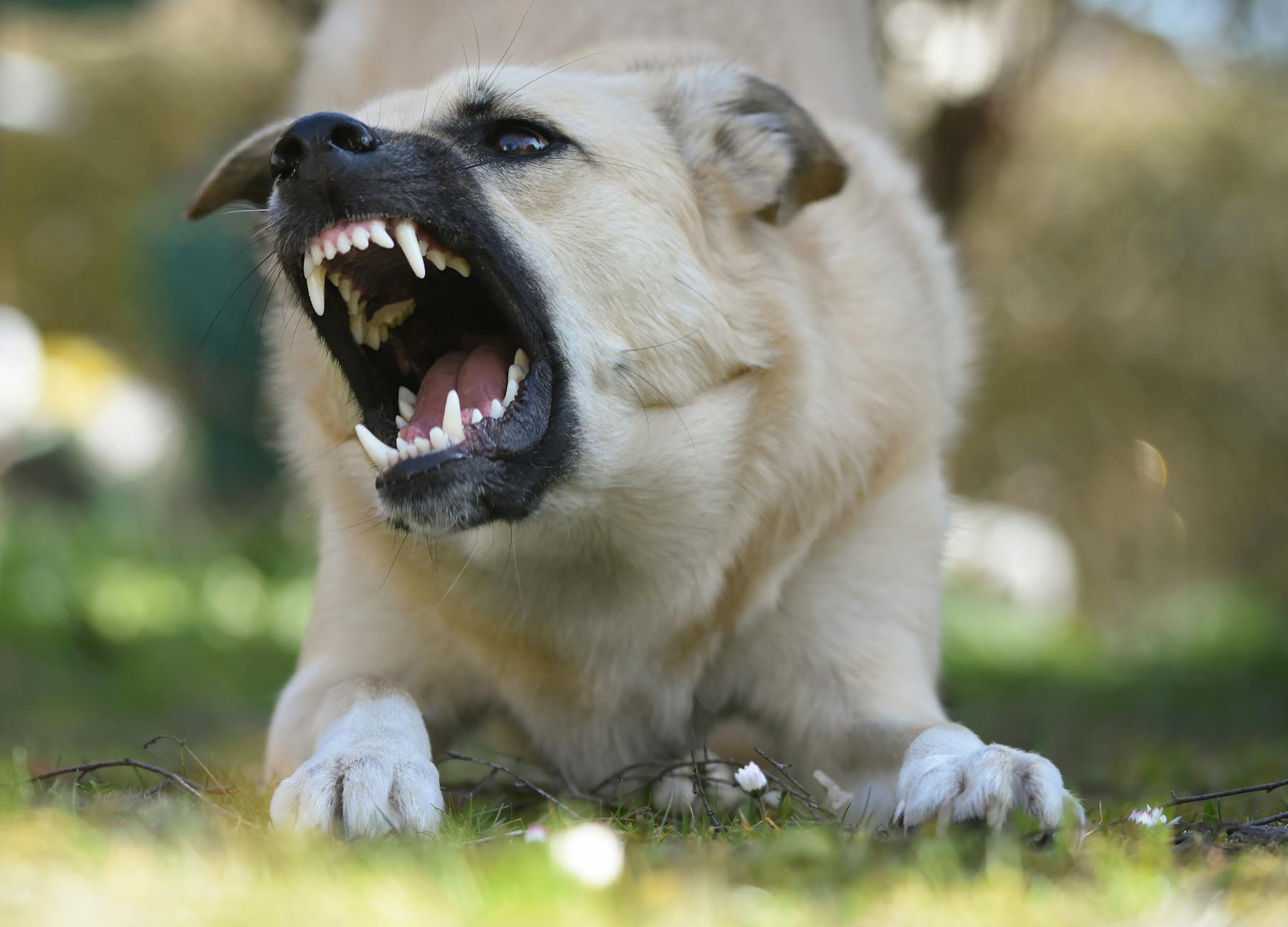
You never want to deal with dog aggression toward kids in your home. Dog bites to children have become far too common, and many of them are preventable. Understanding the warning signs of aggression is key to keeping kids safe around dogs, especially unfamiliar ones.
Here are the red flags every parent, guardian, and caregiver should watch for:
🚩 1. Stiff Body Language

If a dog suddenly freezes or becomes very still, that dog is not calm!
Freezing is a warning, usually the last warning that a parent gets before a bite. This stiffness is a sign the dog feels threatened and may lash out if approached further.
🚩 2. Growling or Snarling
Growling is a clear warning that parents and even most children understand. Even if a growl sounds soft or you think it may be a play growl, don’t dismiss it. Snarling and growling are typically an escalation when other body language has been ignored. They usually come right before a snap or bite.
Never punish a dog for growling. This teaches dogs to skip the warning and jump right to biting a person the next time they feel uncomfortable. Instead, give growling dogs space and remove your children right away.
🚩 3. Hard Stare
To dogs, direct eye contact is usually rude (with the possible exception of herding breeds). A dog giving a hard, intense, direct stare is not being curious, it’s a warning.
Dogs often give very direct eye contact when they are trying to protect what is theirs. This could mean toys, food, or space.
🚩 4. Whale Eye (or side eye)

Most dogs will not stare down a person when they feel uncomfortable. Instead, they often avoid direct eye contact by giving “whale eye.” Whale eye is a side eye glance, when you can see the whites of their eyes.
Whale eye signals discomfort and often precedes fear-based aggression. Dogs frequently give whale eye when something valuable is being taken away, or when their space is being invaded in an uncomfortable way.
🚩 5. Avoidance or Hiding
Dogs who try to leave, hide behind furniture, or turn their head away from children, could be overwhelmed. Forcing an avoidant dog into an interaction can push the dog into defensive behavior.
Kids should never follow or pet dogs who are walking away from them. This is often the first sign that a dog is done with a child.
🚩 6. Licking a Child’s Face

Parents often interpret face licking as a sign of affection, but this is not always the case. Dogs can use “kisses” to get children to give them space. This is especially true of babies and toddlers when they approach a dog’s face head on.
Not all face licking is a warning sign, but parents should never assume kisses are automatically a sign of affection. Read more about kiss to dismiss.
🚩 7. Lip Licking
This is often the first sign that your dog is uncomfortable. Dogs who lick their lips (when they haven’t just eaten and aren’t anticipating a meal) are unsure about something.
Not all lip-licking dogs bite, but this may be the earliest sign of discomfort your dog will give. If your dog is licking their lips, ask yourself why.
- Is something making them uncomfortable?
- Have they had enough of an activity?
- Have too many stressful things happened in one day, and they need time to recover?
Help your dog get a break long before she feels the need to escalate her behavior.

✅ What You Can Do:
- Teach kids to respect space – no hugging, climbing on, or pulling tails.
- Learn more about dog body language.
- Supervise all dog-child interactions, especially with new or nervous dogs.
- Intervene early if you see red flags, redirect calmly and safely.
- Never punish a growl: it’s a warning sign you don’t want to suppress.
💡 Remember: Most dog bites are preventable. Knowing the signs and respecting a dog’s boundaries protects both kids and pups. 🐶❤️


Leave a Reply