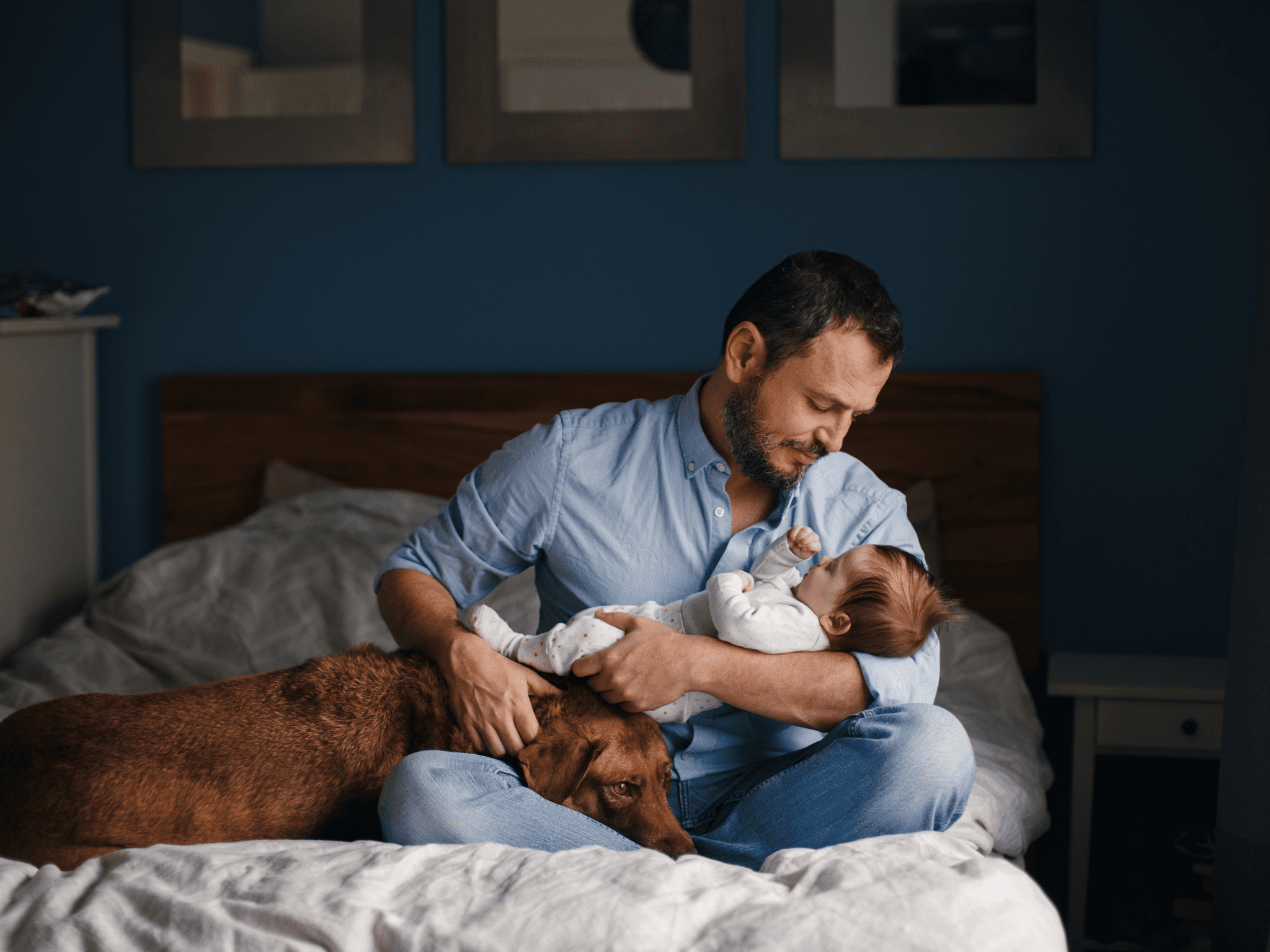
Your new baby’s first year is full of big changes for your whole family, including your dog!
You’ve read the books, searched on google, and shopped for all the things you need for your little one. You are (mostly) prepared for all the change this bundle of joy will bring.
But how can you prepare your dog for the new baby? And, more importantly, how can you make sure that your dog is safe around your baby?
The transition can be tough on dogs, especially if your dog was your “first baby.” But your dog doesn’t need to be left out. With a little planning and empathy, you can help your dog feel secure and included through every stage of your baby’s first year.
Here’s how to support your dog through those big baby milestones:
1. Prepare Your Dog Before the New Baby’s Arrival

Before your baby comes home, adjust your dog’s routine to what it might look like post-baby.
Start doing these things as early as possible:
- Changing walk times or feeding schedules.
- Introducing new rules about where the dog is and isn’t allowed.
- Practicing being alone for short periods even when you’re home (think diaper blow outs).
- Introducing baby sounds (crying, babbling, swing noises) using recordings.
- Creating a “safe zone” where your dog can relax undisturbed.
2. First Introductions Matter
You want your dog and your new baby to be best buds, but the most important thing is safety, right off the bat. That’s why introducing them properly is so important! A good introduction will teach your dog exactly how to act around this new family member.
When you bring baby home:
- Greet your dog first without the baby so they can get their excitement out.
- Let them sniff baby’s scent before meeting the baby.
- Feed your dog, and calmly bring in the baby. Swaddle or keep your baby in the car seat for the very first introduction.
- Don’t make it a big deal or encourage your dog to smell or interact with your baby.
- Keep the first meeting short, calm, and positive. Praise and treat your dog for gentle behavior.
3. Stick to a Routine Where You Can

Dogs thrive on consistency. While your schedule will change with a baby, try to:
- Keep feeding and walk times close to consistent.
- Set aside even 5–10 minutes of focused time with your dog each day. A walk, play session, training, or just some affection.
- Use doggy puzzles or treat toys during baby routines like nap time and diaper changes.
The more you can create a routine, the easier all the transitions of your baby’s first year will be for your dog (and everyone else)!
4. Create Positive Associations with the Baby
Your dog will see your baby as a part of the family if you start the bonding process right away. To do that, pair your baby with all the good things your dog loves.
Here’s how:
- Give treats or special toys when the baby is around.
- Speak calmly and kindly to your dog while holding or feeding the baby.
- Pet the dog while holding the baby.
- Wear your baby when feeding or caring for the dog.
- Get out for walks or adventures with the whole family.
- Avoid scolding them just for being curious about the baby. Gently redirect instead.
5. Give the Dog Space to Opt Out
Babies bring noise, unpredictable movement, and eventually, toddler chaos.
Make sure your dog always has:
- A quiet room or crate to retreat to.
- A rule that the baby isn’t allowed in that space.
- A way to escape if they feel overwhelmed. This is especially important when baby starts crawling!
Give your dog treats frequently when they choose to go to their safe space. This will come in handy the older your dog gets!

6. New Baby’s Mobility Milestones
Mobile babies are very different than babies who stay in their parent’s arms. Your dog may be surprised, confused, or nervous any time your child reaches a new milestone. That’s normal, and you can help your dog through it by being ready!
When your new baby starts rolling, crawling, or walking:
- Give your dog tons of time to watch your baby without interacting. Use baby gates. This helps your dog realize that your baby is changing.
- Supervise the new baby’s interactions with the dog closely. Never leave them alone together, even for a second.
- Teach your child “gentle touches” as soon as they’re old enough to understand. Use stuffed animals to help teach it.
- Watch your dog for stress signs like yawning, lip licking, turning away. Give your dog more breaks than you think they need.
7. Ask for Help When You Need It
Whether it’s hiring a dog walker, enrolling in a positive reinforcement training class, or having a friend help out, support is key. You don’t have to do it all alone.
If you have friends with babies a bit older than yours, have them over! Give your dog a chance to see a crawling or walking toddler before it’s your kid.
Beware: Just because your dog does well with your kid doesn’t mean they are fine with other people’s kids.
You got This!
Your new baby’s first year is going to fly by, for you and your dog!
How fun is it for your little one to grow up with your dog! And how cool is it that your dog can be your child’s first best friend!
Remember: Your new baby’s first year is an adjustment for everyone, but your dog doesn’t need to be pushed aside.
With patience, structure, and love, they can go from “first baby” to proud big sibling.


Leave a Reply