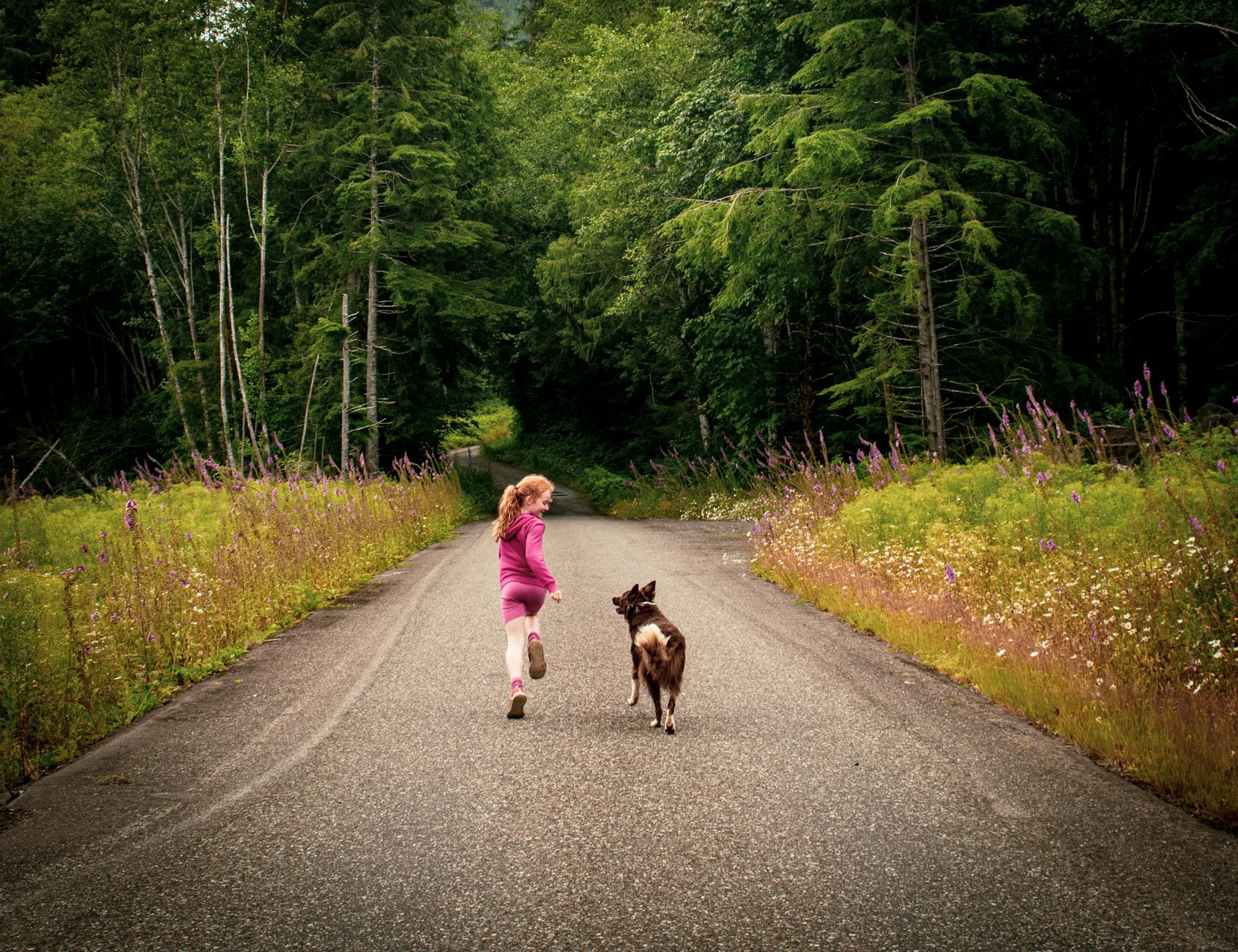
Involving kids in dog training can be a fun, rewarding experience for the whole family! Elementary-aged children are at a great stage to start learning responsibility, patience, and empathy—and working with a dog does all three. Turn training time into a bonding opportunity that benefits both your child and your pup.
Why Include Kids in Dog Training?
Children naturally love animals, and giving them a role in training helps them feel included and capable. It also teaches them:
- Responsibility – understanding that they can teach their dog know things
- Communication skills – learning how tone and body language affect behavior
- Empathy – recognizing a dog’s feelings and needs
For dogs, consistent interaction with children can improve socialization and build trust. It can also help the dog to learn more quickly if the whole family is on the same page.

Start with the Basics
Before your kids teach the dog new things, have them practice familiar skills.
- Sit
- Stay
- Come
Most dogs will NOT respond the same way to a child as they will to an adult. Remind your child that dog’s don’t understand English.
Show your child how to give clear, one-word commands and use a calm but confident voice. Demonstrate first, then let them try while you supervise.
Make It a Game
Kids and dogs learn best through play. Turn training into a game, and avoid letting it become a test or a chore. This keeps your child engaged and makes the experience enjoyable for the dog too.
When kids are involved, it is especially important for dog training to be upbeat and fun. Stop before anyone gets frustrated. Keep things positive and treat-based. Avoid using punishment.
Dog Training for Kids: Using Positive Reinforcement
Encourage your child to reward good behavior with treats, praise, or affection. Help them understand that dogs learn best when they feel safe and encouraged—not punished.
A simple rule: Reward what you want to see more of.
Here’s how you and your kiddo can get started:
Step by Step Dog Training for Kids 🦴
Step 1: Teach the Click = Treat
Before starting the trick, your dog needs to understand the clicker (a click pen also works).
- Click the clicker
- Get a treat from your treat pouch
- Give the treat to your dog. Repeat 10–15 times
💡 Tell your child: “Click means ‘Yes! You did it right!’”
Step 2: Teaching your Dog to Boop
Now it’s time to introduce the trick.
- Have your child hold their hand right in front of the dog’s nose
- Most dogs will sniff the hand in from of them
- Click right when your dog touches the hand
- Give the dog a treat
Repeat several times.

Step 3: Strengthening the Skill
Once the dog boops a hand right in front of their nose, try moving it farther away.
- Move the hand a little to the left or right
- Move the hand up or down
- Click and reward each time your dog touches the hand
Step 4: Teach a Verbal Cue
Now that your dog knows how to do the boop, you can teach your dog the word for the skill.
- Say “Boop.”
- Hold out your hand like before.
- When the dog boops, click and reward
This teaches the dog to listen to your child’s words.
Step 5: Celebrate and Practice
Once your dog knows to touch on cue, your kids can use this skill in all kinds of ways! Dogs pretty much go wherever their noses lead them.
Kids can teach the dog to give boops to their friends, or to follow them through an obstacle course. They can use their hand to teach the dog to spin in a circle, get on a bed, or crawl under a chair.
Set Clear Boundaries
Kids should know what they are and aren’t responsible for. For example:
- They can help with training sessions
- They should never correct or discipline the dog on their own
- An adult should always be present
Help your child learn how to read dog body language and know when their dog feels uncomfortable.
Keep Sessions Short
Young children have short attention spans, and so do dogs. 5-10 minutes of training at a time tends to be enough for a dog to learn something.
Ending on a positive note helps both your child and dog stay motivated.
Final Thoughts
Involving elementary-aged kids in dog training isn’t just about teaching commands—it’s about building relationships. With patience, guidance, and a little creativity, your child can become a confident, kind, and capable dog handler.
And along the way, they’ll create memories (and habits) that last a lifetime.


Leave a Reply