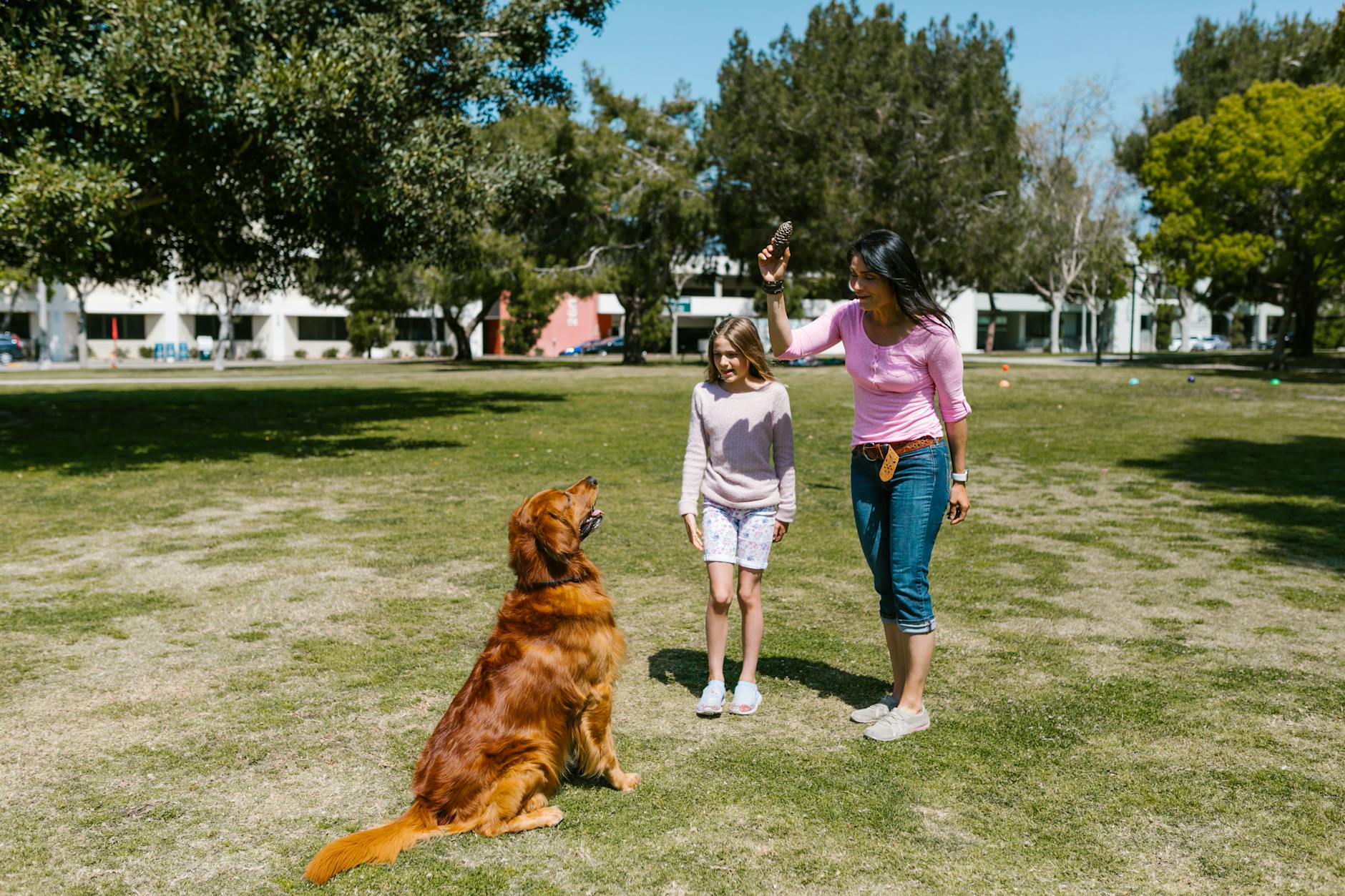
Parents: here’s what you need to know about dog training for kids. Kids make very capable trainers. Set them off on the right path, and open up a whole world of curiosity, adventure, and accomplishment.
Whether you have a puppy or an older dog, getting children involved in training develops responsibility, empathy, and communication skills. But where do you begin? Here’s a simple guide to help parents and kids start training their dog together, safely and effectively.
⸻
Safety and Respect for Kids and Dogs
Before any training begins, it’s crucial that children understand how to approach and interact with dogs respectfully. This may be different based on the age of your child and your dog’s tolerance.
Kids growing up with a dog should begin to develop an understanding that dogs are living beings with thoughts and feelings. A good jr. dog trainer knows that dogs are not robots to be controlled, but creatures to be understood.
When Dog Training with Kids, Teach This:
- Avoid hugging, tugging, or startling the dog.
- Don’t run away from a dog unless you want to be chased.
- Learn about doggy body language—tail wagging doesn’t always mean “happy.”
- Always ask an adult before trying new commands or giving treats.
Once your dog and child have a good understanding of the ground rules, you are ready to jump into training!
⸻
Make Training a Game

Kids love to play, and so do dogs. When dog training is a game, we don’t worry too much about mistakes, and we keep things positive.
Make sure that your child understands that they are on the same team as the dog. The goal is not to make the dog do what we want (this is true of all dog training, but especially dog training for kids). The goal of training is to try to work together and understand each other.
How to do it:
- Keep training sessions short
- Let your kid practice easy skills your dog has already mastered
- Use lots of tiny training treats. I recommend dropping them on the floor to keep sharp teeth far away from little fingers
If training is about communication, the first thing is that your dog needs to pay attention to your child. Have your child call the dog and give treats when the dog checks in. Make sure there isn’t much going on so that your dog won’t be distracted.
Once your dog is paying attention, your child can try cuing a skill like sit.
If your kid is struggling, here’s how you can respond:
- Say: “It looks like she’s still learning that.”
- Practice: Stand behind your child and cue the dog to do the skill. Have your child give a treat.
- Transfer: Have your child cue the dog – wait a second – then cue the dog yourself.
- Reinforce: Have your child give the dog (several) treats when the dog does the skill.
- Fade: Make your cue quieter or more subtle so that your dog has to pay attention to your child’s cue.
⸻
Use Positive Reinforcement Only
Encourage kids to focus on rewarding good behaviors. Set a good example by responding to your dog’s good behaviors and ignoring (and preventing) bad ones.
This builds trust and keeps training enjoyable for the dog. Teach your kids that yelling, scolding, or physical aggression toward the dog is never acceptable. Teach your child to use a cheerful tone and give lots of praise when the dog does what they want.
Kids pick up on this so quickly when they see it consistently modeled, and you might find that your dog is better behaved because of it!
⸻
Supervise and Step In When Needed
While kids can take an active role in training, adult supervision is a must. Dogs can sometimes get overly excited, distracted, or even confused, which can lead to unsafe situations if not handled properly. Stay close by to:
- Guide your child through each training step.
- Monitor your dog’s reactions and intervene if needed.
- Reinforce consistency in expectations.
If your child is training outside, consider having your dog on two leashes, one for you and one for your child.
⸻
Celebrate Small Wins
Training takes time, patience, and repetition. Teach kids to celebrate progress, no matter how small. Did your dog finally sit without a treat? That’s a win. Did your child remember to wait for eye contact before giving a cue? Another win!
Encouraging kids to recognize these moments helps build their confidence as young trainers and strengthens the bond they share with their dog.

⸻
Final Thoughts
Dog training isn’t just for adults. It’s a wonderful opportunity for children to learn leadership, compassion, and responsibility. With the right approach and plenty of encouragement, your child can become a confident and effective dog trainer. Start simple, be patient, and enjoy the journey as your child and pet grow and learn together.
Leave a Reply