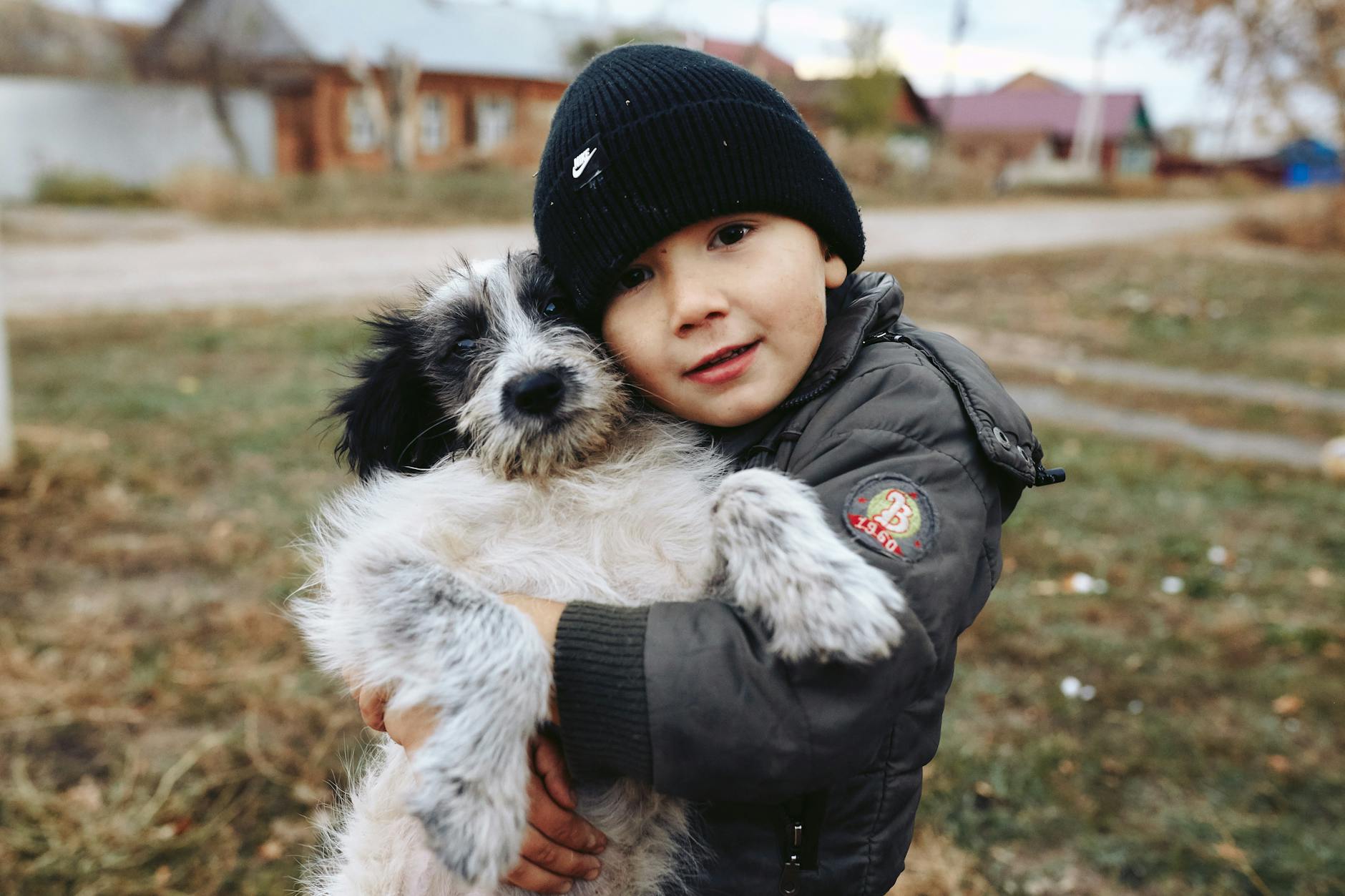
Dealing with puppy biting and preschoolers at the same time is not for the faint of heart. Remember the sleepy ball of fluff you brought home to your excited children? That wonderful, cuddly, little angel has been replaced with a flesh-eating dinosaur.
Puppy biting can cause a lot of emotions, especially with preschoolers. To young children, it can seem like the puppy is being mean or scary, and biting can damage their relationship.
The puppy biting phase is normal, but it can feel overwhelming when you’re trying to keep your child safe and teach your puppy good manners.
The best thing that you can do is understand what your puppy needs during this tricky phase. Then, you and your little ones can use these tips to navigate it with patience and confidence!
Why Puppy Biting is Worse with Preschoolers
No, your puppy does not hate your kiddos. Most puppies also aren’t trying to dominate or control the preschoolers they bite. Puppies use their mouths the way toddlers use their hands, to explore, play, and learn. Puppy biting is:
- A part of teething.
- A way to play with littermates and people. Puppies learn to control their biting through rough-and-tumble games.
- An outlet for excitement, exhaustion, or overstimulation.
The good news? With the right guidance, most puppies outgrow this phase by 6–8 months. It should start gradually improving around 5 months. Learn more about biting and puppy development, and make sure your puppy is on track!
Why Puppy Biting and Preschoolers is Hard

Preschoolers and puppies are actually a lot alike: both are curious, impulsive, and still learning boundaries. The challenge is that preschoolers move fast, squeal, and play. Their movement and energy is exciting to puppies, who become extra playful and mouthy.
Most adults recognize when a puppy is starting to get carried away. They frequently respond by redirecting the puppy or cutting off the play. Adults can often end rough play just by standing up, their height effectively cuts them off from the puppy.
Young children are not able to notice early signs that the puppy is getting carried away. By the time that the puppy has gone too far, preschoolers are often emotional themselves, and can’t react calmly. To make matters worse, children are smaller than adults, which makes it look (to the puppy) like they are always at “play-level.”
The result? A cycle where the puppy bites harder, the child yells or runs, and both end up frustrated (and sometimes hurt).
Puppy Biting and Preschoolers: 7 Tips
Here are some tips and tricks to help your child and puppy get along and play nicely together.
1. Supervise Closely
Never leave your preschooler alone with a puppy. Just like you’d supervise around water, playground equipment, or open flames, active monitoring is key to keeping everyone safe.
This will also limit the amount of time that your puppy and child spend together. For puppies and preschoolers, quality is far more important than quantity. They will build a great relationship, especially if they get a healthy break from each other.
2. Teach “Statue Mode”
Coach your preschooler to stand still like a tree if the puppy bites. No yelling, no running, just freeze. You may need to help your puppy understand that freezing always means game over. This takes practice, but it helps the puppy learn that biting ends the fun.
3. Provide Puppy Outlets
Make sure your puppy has plenty of appropriate chew toys. Rotate them often so they stay exciting. Encourage your preschooler to hand (or throw) the puppy a toy when biting starts.
It can also be helpful to teach your preschooler to only play with the puppy when the puppy has a toy in his mouth. Puppies can’t bite and hold a toy at the same time.
4. Use Short, Structured Play Sessions
Keep interactions between your child and puppy brief, focused, and positive. End playtime before either one gets too wound up.
Open ended play is fun, but with preschoolers and puppies, having a goal may be the best way to keep things safe. Have your child get the puppy to follow them up stairs, through a tunnel, or under a table. This will be good socialization for the puppy and will help your little one feel like a leader.

5. Give the Puppy a Break
Crates, pens, or baby gates aren’t punishments, they’re safe spaces. Puppies are often extra mouthy when they are too tired. They need help regulating their bodies (just like your preschooler)! Having a puppy-proof spot to wind down will help your puppy get the rest they need.
Teach your child to leave the puppy alone in their safe space. If the puppy is getting too nippy, calmly move them to their rest area for a reset.
6. Model Gentle Interaction
Teach your puppy that not every interaction needs to be rough and tumble. Show your preschooler how to pet calmly (slow strokes, not pats or grabs). Let your child help you train and feed the puppy. Make sure that the puppy knows to stay calm and well-behaved around food. Praise both puppy and child for gentle behavior.
7. Address the Height Issue
Adults often (without meaning to) teach the puppy that play starts when people get down on their level. They might kneel down and start wrestling, or sit on the floor to play with the puppy’s toys.
Preschoolers are always on puppy level. They cannot stand up to get out of the puppy’s space. Adults can help puppies and kids by teaching the puppy that not all time on the floor is rough and tumble play time. Get down on the floor with the puppy and scroll through your phone or read a book. Teach your puppy not to bother you just because your face is close to theirs.
Remember: The Puppy Biting Phase will Pass
It may feel never-ending, but with consistency, supervision, and patience, your puppy will grow out of the biting stage. In the meantime, you’re not only protecting your preschooler, you’re teaching your puppy the lifelong skills they need to be a safe, happy family dog.
✅ Key takeaway: Puppy biting is normal, but with supervision, redirection, and calm guidance, your preschooler and your puppy can grow together safely.
Leave a Reply