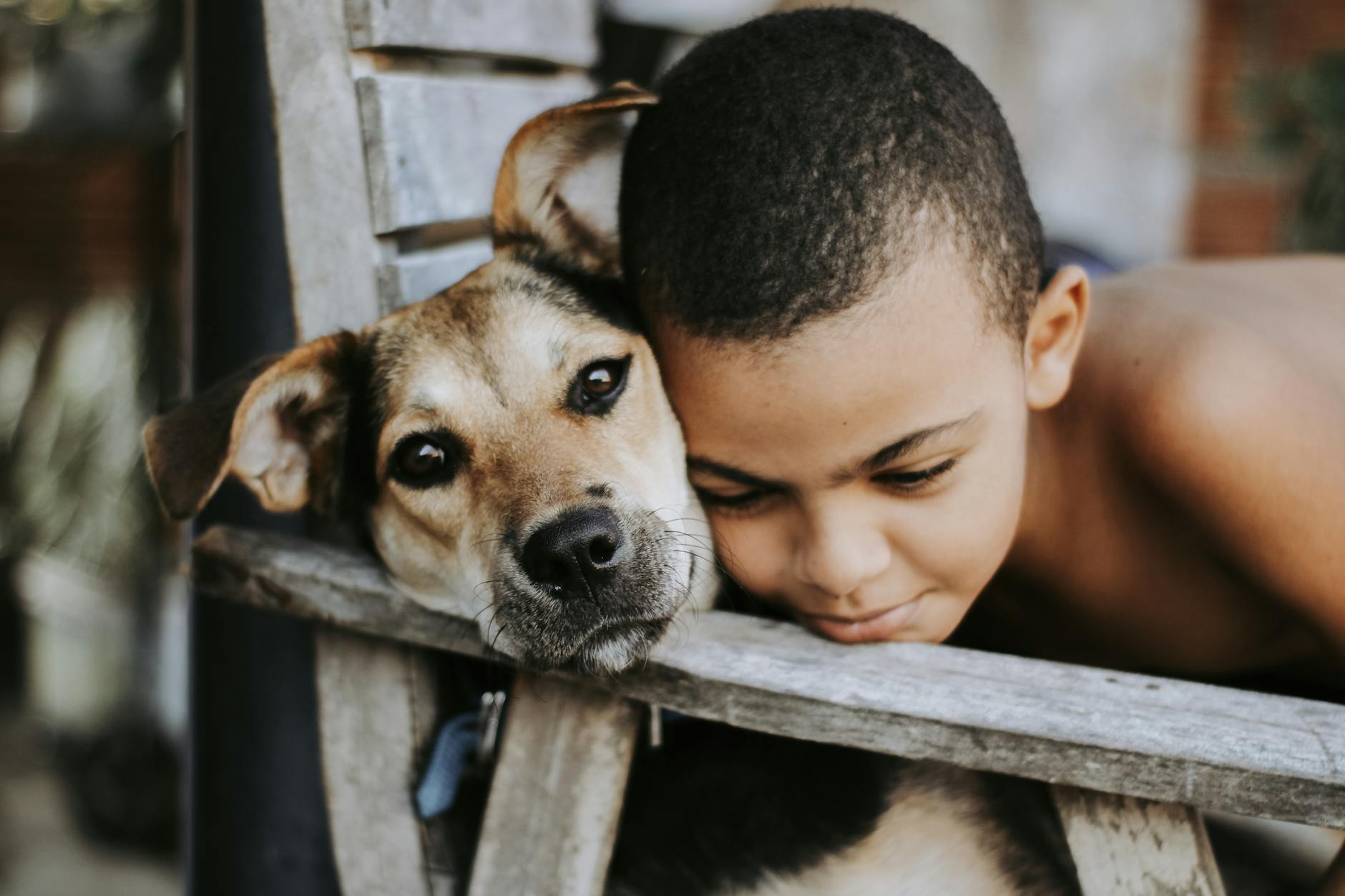
Bringing a new rescue dog home is a moment full of hope, and when you have kids, it can be the start of an incredible friendship. But rescue dogs often come with unknown histories, so building trust between them and your children takes time, patience, and a little know-how.
Here are 7 practical steps to help your new rescue dog bond with your kids:
1. Give your New Rescue Dog Time to Decompress
When your rescue dog first arrives, everything is new (and possibly scary).
Even if your dog is excited and wants to explore, try to keep things low key for them. Stick to one or two rooms for the first couple of days, and let them meet the kids one at a time instead of all at once.
Remind your kids that the dog may need to adjust to your home before she wants to interact or play. Create a quiet, safe space where they can relax without interruptions, especially from excited little hands.
2. Teach Kids How to “Speak Dog”
Children need guidance on how to behave around animals. Teach kids to watch out for these warning signs that your new rescue dog feels uncomfortable:
- The dog looks away or tries to leave
- Growling, snarling, or showing teeth
- Tucked tails or excessive lip licking
- More about warning signs

In addition, teach your kids rules for safe interactions with your new rescue dog (and dogs they meet while out.
- Move slowly and calmly around dogs.
- Kids shouldn’t pick up, restrain, or hug the dog.
- Avoid staring or sudden movements that can startle a dog.
- Let dogs come up to you, and never follow a dog that is trying to get away from you.
3. Start with Calm, Supervised Interactions
Keep initial meetings short, calm, and fully supervised. Sit together quietly and let the dog sniff or observe from a distance. Use treats to create positive associations. Avoid overwhelming your dog with multiple children at once.
Especially with younger kids, give your dog plenty of opportunities to watch the kids (without interacting). I like to use baby gates or playpens.
This is especially important for rescue dogs who often haven’t had many interactions with children. Observing kids without interacting helps dogs to understand what kids are like.
Learn more about how to help a rescue dog transition smoothly from the ASPCA.
4.Use Positive Reinforcement for Everyone
Encourage gentle behavior from your kids, and reward your dog for calm, curious behavior. Use treats, praise, and affection to reinforce good moments. Make bonding feel like a win for both sides.
Here are some things you can reinforce (and teach your kids to reinforce as well):
- Looking at you
- Staying calm when something exciting happens
- Keeping 4 paws on the floor
- Calmly watching the kids
Part of using positive reinforcement is preventing unwanted behaviors. Look for ways you can keep your dog from doing that thing in the future.
5. Involve Kids in the Care Routine
Give your kids age-appropriate responsibilities: helping fill the food bowl, brushing the dog, or handing out treats during training. Shared routines build connection.
Your dog should have lots of positive or neutral experiences with kids. The goal is to associate your kids with all the things that your dog loves.
Prevent tense situations and dog bites to children by being prepared. Closely monitor kids and dog when food is present, and make sure that kids never take anything from the dog.
Your dog should know that children are givers of food and treats, not takers.
6. Play Together Safely with a New Rescue Dog
Choose games that are safe and structured, like gentle fetch, trick training, or puzzle toys. Avoid rough play that could trigger fear or over-excitement. Here are some great activities to get you started!
Games like chase and tug can be very fun for kids and dogs, but they quickly become overstimulating and even dangerous with untrained dogs. If this is what your kid and dog enjoy together, make it safer with a toy on a leash. Encourage the dog to chase the toy, not your child’s hands or clothes.
Let the dog set the pace and always supervise!

7. Be Patient and Consistent
Bonding doesn’t happen overnight, especially for a rescue dog who may have past trauma. Set predictable routines, enforce respectful boundaries, and celebrate small milestones like the first tail wag or snuggle on the couch.
❤️ Final Reminder:
A bond between a child and a rescue dog is one of the most beautiful gifts—but it’s built on trust, respect, and time. Go slow, stay kind, and watch something amazing grow.


Leave a Reply