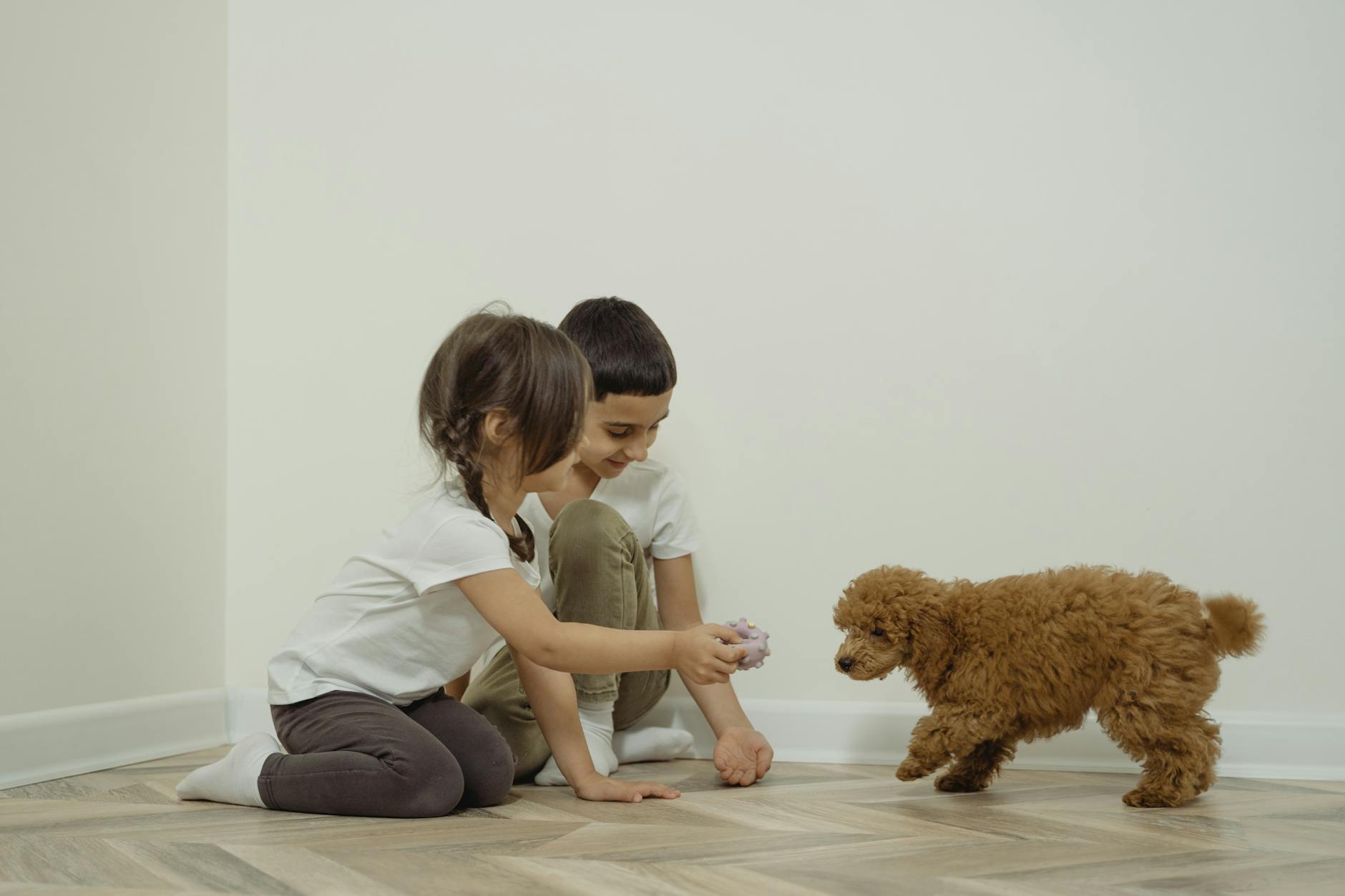
Setting boundaries for dogs and kids is vital to keeping your home safe. Not only that, boundaries set dogs and kids up to form amazing, life-long bonds. But it isn’t always easy knowing what is necessary for your home.
After all, your dog’s age and personality will impact how much they will tolerate from your kids. And, as your kids get older, old rules become unnecessary or new challenges may pop up.
Does this sound familiar?
- Your big kid and dog love playing together, but you’re constantly playing referee. It’s like the dog thinks the child is a puppy, he has no rules and won’t stop jumping, nipping, and ramming into your kid!
Or maybe this?
- Your toddler is walking on wobbly footsteps when the dog blows in and charges past her to get to you. Oblivious, the dog bumps the child, who falls to the ground with a thud.
Or even this?
- You taught your preschooler to never touch the dog’s food. But now the dog is growling at him any time there is food in sight, even if it isn’t the dog’s food. You don’t want to get rid of your dog, but you’re worried your kid will get bit.

We can avoid unsafe situations if we teach our dogs boundaries around kids.
So how do we teach the dog boundaries?
We don’t need to be mean to teach our dog the rules of the house. We also don’t need to spend tons of time teaching them perfect obedience skills (although that won’t hurt).
Teaching boundaries to the dog doesn’t need to take tons of time or energy. What it will take is a little bit of planning, and a whole lot of treats.
Planning: the key to a peaceful home
Instead of reacting to our dog’s behaviors as they occur, we want to stop them before they’ve even begun. You probably already do this around your home to stop your dog from doing things you don’t want, here are some common examples:
- using a trash can with a lid so your dog doesn’t steal the trash
- putting shoes away in a closet
- closing the door to rooms your dog isn’t allowed in
The same concept applies to teaching the dog boundaries around the kids. Planning is about prevention. Stop unacceptable behavior around kids before it can occur.
Dog Training: Planning, Boundaries, & Kids
Planning for our dogs to have better behavior starts with understanding where our dog’s unwanted behaviors may occur. I’ve linked a post at the bottom of this page that can help you identify danger zones in your home.
Once you know the areas your dog may need boundaries, you need to make sure you have the right tools.
Remember, planning is about prevention. You want to choose the tools that will make the unwanted behavior stop.
The best tools for each home and situation vary, but here are some options:

A Playpen:
Playpens let your dog and child share space, but without interacting. Your dog will learn to be calm and hang out while kids are playing.
Playpens are great if you want to prevent behaviors like jumping, biting, stealing toys, or knocking over the kids. They are especially great to use in homes with babies and toddlers.
Remember – parallel play is still playing together! Your dog and toddler don’t need to play with each other to be learning. They learn more about each other by casually observing than they do from interacting with each other in unsafe ways.
A Leash:
Leashing your dog helps eliminate unwanted behaviors while also keeping your dog close to you (and close to the action). This is great if your dog is ready to start training in real-life. A leashed dog can interact with dog-loving kids with a safety net. You can intervene and stop bad behaviors if things get too exciting.
Just using a leash can stop your dog from jumping, playing too rough, or other rude behaviors. It is a great short term solution around visiting kids or company.
Crates/Gated Rooms:

If your dog struggles to control himself around food, using a crate or room can your home safer. Choose a space where kids don’t go and make it the dog’s spot.
All the dog’s food bowls, treat-stuffed toys, puzzles, and bones can stay in the crate or go up high when they aren’t in use.
Feed the dog in their space, and keep your kids away from it. You can also use it space during human mealtimes.
If your dog is protecting food, especially around kids, please consider talking to a certified professional dog trainer.
A Dog Bed
If your dog is trained to stay on a bed, you can use this skill to prevent unwanted behaviors. This is great for families with kids who are old enough to leave the dog alone.
Just ask the dog to go to their bed during times when he may otherwise misbehave, and follow up with lots of treats.
Examples: how these tools can work in your home
Here are some ways you can prevent problematic behaviors before they start.
- Crate or gate your dog off when you leave the house so he won’t jump on the kids when you get home
- Give your dog a minute of calm down time before saying hi to kids
- Keep toys the dog may steal in kid’s bedroom/playroom (and keep the dog out of those rooms by closing the door)
- Put your dog on leash while you eat dinner
- Set up a play space for your baby and gate it off from the dog
Training your dog to understand boundaries with the kids:
Once you have a plan to stop your dog’s unwanted behaviors before they occur, you are ready to start training. Training is about teaching your dog the right way to interact with kids.
To get started, check out my FREE mini class – 3 First Steps to a Kid-Friendly Dog. The class includes games, instructions, and video guides to teach your dog the basic skills needed to thrive in a home with children.
Find me on Instagram, @scallywagsdogtraining.
Was this helpful? You might like this post too!
Leave a Reply