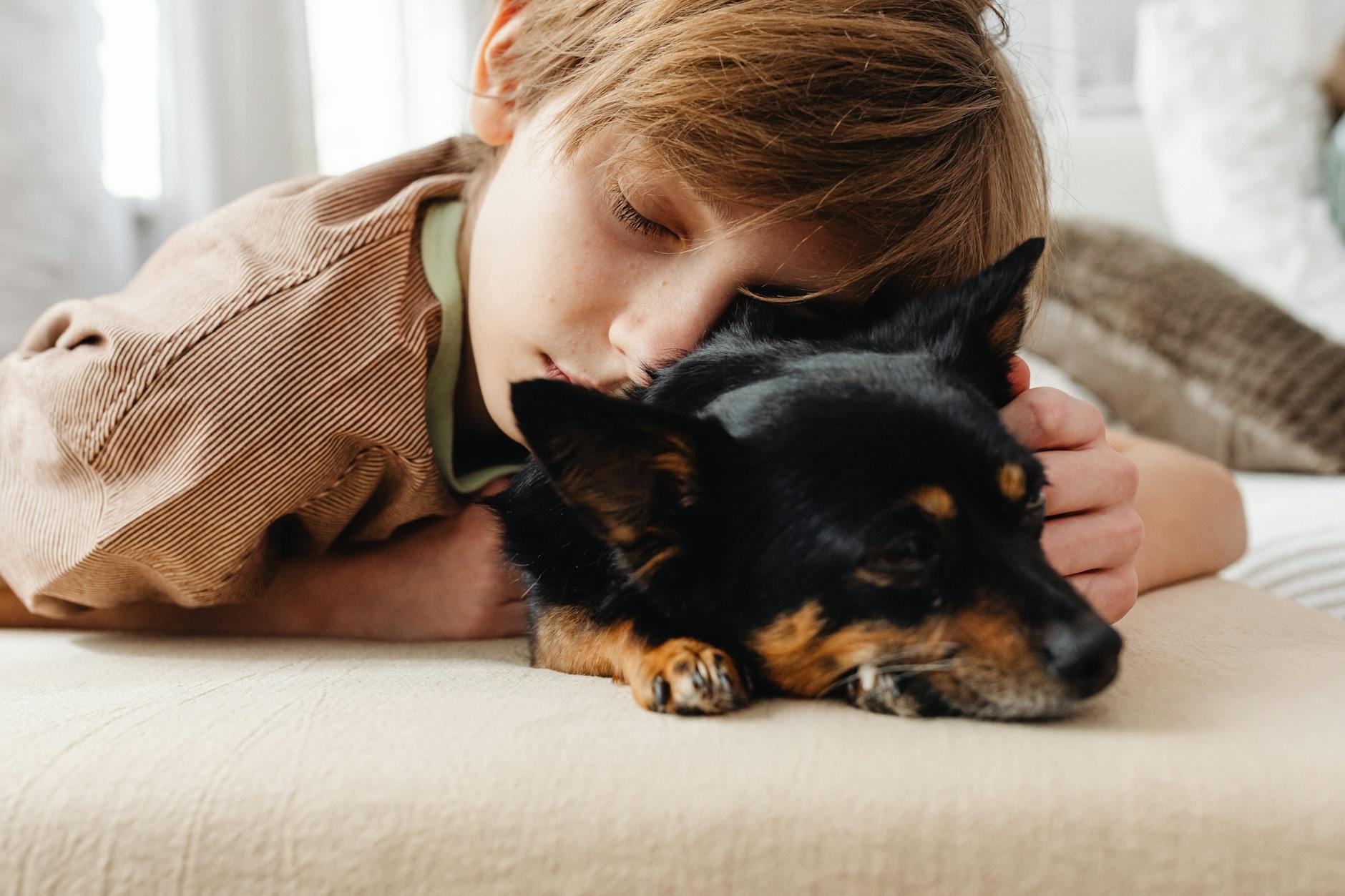
When dog and kid safety rules are in place, they can be free to form incredible bonds. But without the rules and structure, dogs can be dangerous to kids, and vice-versa. Accidental injuries from dogs who jump, bite, or push children are often highly preventable.
Even the gentlest dog and the sweetest child need guidance, boundaries, and supervision to prevent accidents. These essential rules help keep both children and dogs safe, happy, and confident around each other.
1. Always Supervise Interactions
Never leave a young child alone with a dog, no matter how well you think they get along. Accidents happen quietly and quickly. Active adult supervision is the single most important safety rule.
This also means never leaving an older child in charge of small children and a dog. Just put the dog in a separate space and save yourself a world of trouble if anything goes wrong.
2. Teach Kids How to Greet a Dog
When meeting a new dog, especially in public, children should:
- Ask permission before petting any dog
- Let the dog approach them first
- Avoid hugging, grabbing, or kissing a dog’s face
Dogs can feel threatened by sudden or intense contact, especially face-to-face. In public, even friendly dogs may react strongly to children. Kids are often fairly intense for dogs who don’t see them frequently.

3. No Disturbing Dogs While Eating or Sleeping
Your dog should be able to count on some kid-free times and spaces. Most kids can get away from the dog by shutting a door, but dogs must tolerate kids. Stop this by giving your dog a safe place where kids aren’t allowed to play with them.
Kids should never:
- Touch a dog while it’s eating
- Take food, toys, or bones away. They should always trade the dog for treats if they take something away.
- Wake or mess with a sleeping dog
Even tolerant dogs may react defensively when startled or guarding resources.

4. Learn Dog Body Language
Not only is having a dog fun for most kids, it is also a really good chance to teach your child empathy. One way to do this is to start showing your child what the dog is saying with her body.
This is especially important when it comes to red flag behaviors or warning signs. Teach children (and remind adults) to recognize warning signs such as:
- Growling or snarling
- Stiff body posture
- Ears pinned back
- Whale eye (showing the whites of the eyes)
Every dog is different, but you can find more examples of dog body language here. If a dog shows discomfort, the interaction should stop immediately.
5. Gentle Touches Only
Children should pet dogs gently, no pulling ears, tails, or fur. Rough handling can hurt the dog and provoke a reaction, even if the dog has tolerated it before. If the dog seems scared or unsure, give the dog and child a break from each other.
If a child has a history of hurting or scaring the dog, it is extremely important to supervise them. Dogs may not react the first time they are hit or pushed, but they are likely to react strongly if it happens again. Just like a human, they can only take so much. Keeping an adult between the child and the dog can be a great way to ensure that everything stays safe.
6. Respect a Dog’s Space
Dogs need breaks just like kids do. Set up a safe space for your dog where the kids won’t bother them, and encourage your dog to spend time there. Teach children that if a dog walks away, hides, or goes to its safe space, to leave them alone.
Often, the first sign of discomfort that a dog will show us they are uncomfortable. For many dogs, this is one of the first steps on the ladder of aggression toward a dog bite. Kids should not follow dogs.
7. No Chasing or Climbing
Running, screaming, climbing on dogs, or riding them like toys is unsafe. These behaviors can trigger fear, excitement, or defensive reactions in dogs. Kids should never chase the dog (it makes it hard to teach the dog to come) and should play calmer games instead.
Rough Play: Dog and Kid Safety
A lot of dogs enjoy rough, exciting play, and want to join in with kids. Some kids just love running and getting wild with their dog. Here’s how you can let them do that, safely. These dogs often get carried away and forget to be careful. They can quickly hurt or scare your child, especially if they are bigger dogs.
To keep things fun, attach a toy to a rope or leash and let your child hold the end of it while running. The dog should chase the toy, not your child, and their teeth should stay far away from kids. If the dog stops looking at the toy and starts chasing the kid, stop the game and take a break. Your dog will learn that they can keep having fun if they stay focused on the toy, not the kid.
8. Train and Socialize Your Dog
Basic obedience training and positive socialization make dogs more predictable and comfortable around children. A well-trained dog is safer and more confident in family environments.
Need help or wondering where to get started with your family dog? Contact me to get started!
9. Set Clear Rules for Everyone
Consistency matters. All family members should follow the same rules so the dog isn’t confused and kids don’t get mixed messages.
If you want your dog to listen to your kids, here are some tips to get started:
- Make sure that your dog can listen to you, even if you are sitting on the floor.
- Have your child give a cue, wait a second, then you give the same cue.
- While your dog is learning, only use cues in training. Dogs quickly learn to ignore kids who give lots of cues, but very little reinforcement.
10. Teach Kids What to Do with Scary Dogs
Kids often get into trouble when they are startled by dogs, even if the dogs are friendly and well-meaning. Kids move quickly and speak loudly when startled, which causes dogs to chase and play.
Children should know that when they want a dog to go away, they need to:
- Stand still like a “tree” if a dog approaches or chases them. Dogs chase squirrels, not trees.
- Cross their arms and plant their feet.
- Throw or drop any treats or toys the dog may be after.
- Stay calm and call for an adult.
Practicing this with your dog and your kids can help prevent bites at home and in public.
Final Thought
Dog and kid safety doesn’t happen by accident. You must create an environment of safety through education, supervision, and respect. When children learn how to treat dogs kindly and dogs are given structure and space, both can thrive together.
Leave a Reply