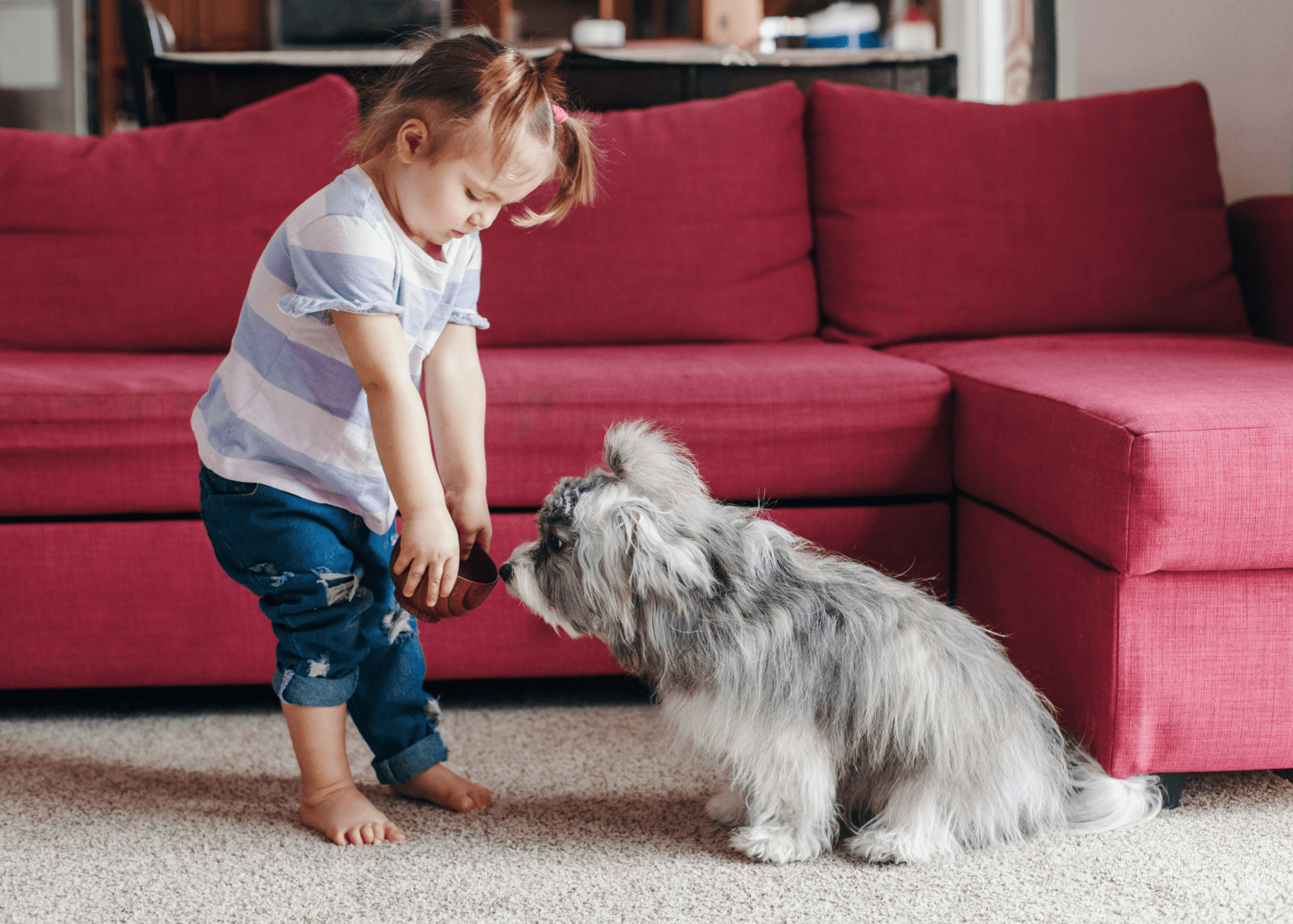
Life with dogs and toddlers under one roof is a whirlwind—but you can prevent a dog bite to your little one by understanding aggression and resource guarding.
Most dog bites to kids are easily avoidable. Resource guarding is more common than people think. Knowing how to spot it early—and handle it properly—can keep your family safe and your dog happy.
Whether or not your dog has shown signs of aggression to children, taking these steps can make your home safe. Here’s what parents need to know.
What Is Resource Guarding?

Resource guarding is when a dog tries to protect something they consider valuable—like food, toys, space, or even a person. This can be subtle (like stiffening or giving a side-eye) or more obvious (growling, snapping, or lunging).
Resource Guarding is NOT about your dog being “mean” or “dominant.” It’s often fear-based: your dog is worried that something they have will be taken away.
And if a child doesn’t know any better—like grabbing food out of a dog’s bowl or hugging a dog mid-chew—it can lead to dangerous misunderstandings.
Resource guarding is a common cause of dog bites. While it is easily preventable, it is much harder to address after it starts taking place. Resource guarding should always be taken seriously, and if you are concerned, you should contact a certified dog trainer.
Why It Matters More When You Have Toddlers

Resource guarding is a huge concern for anyone who interacts with dogs. But it is especially alarming in a home with toddlers.
Toddlers are unpredictable, struggle to read dog body language, and don’t always understand boundaries. This can easily get them into a dangerous position with the family dog.
That’s why it’s twice as important that you take steps to understand and prevent resource guarding.
Scenarios that could set off a resource guarding episode
Resource guarding episodes can happen quickly. That’s why prevention, awareness, and training are so important—especially in households with young kids.
A toddler may:
- Try to take a toy from the dog’s mouth.
- Approach a dog’s food bowl.
- Wander too close to a dog’s bed.
- Reach toward a dog who is begging for food.
- Try to take back an item the dog has stolen.
If you have young kids and your dog has a history of resource guarding, get help from a certified trainer before it’s too late.
Signs of Resource Guarding to Watch For:
Most dogs give early warning signs before they escalate to a bite. Parents can look for:
- Snapping or biting when an item is touched. These are not signs of a bad dog—they’re signs of stress. And they’re asking for space the only way they know how.
- Moving their toy away from someone who might try to take it
- Freezing or stiffening when someone approaches
- Hovering or placing their body over a toy or bowl
- Growling, snarling, or showing teeth
- Quick side-eye glances (whale eye) or lip licking
Dog body language poster:

When you see signs of stress or discomfort from your dog, honor them. Back away and let them have space. If you need to take something from a dog, trade for something better (like a lick of peanut butter or real meat!)
What Parents Can Do to Prevent Resource Guarding
- Supervise, always.
Never leave young children alone with a dog, no matter how sweet the dog normally is. - Respect your dog’s space.
Teach kids that a dog’s bed, crate, food bowl or certain chews are off-limits. Set boundaries early, and reinforce them consistently. - No taking things from the dog.
Even well-meaning kids might try to grab a toy or bone. Instead, teach a trade system: have your child give a treat in exchange for a toy (only with adult guidance). - Feed dogs in peace.
Give your dog a quiet place to eat where kids can’t access. Don’t let children disturb the dog during meals. Use baby gates to keep the space separate. - Learn your dog’s body language.
The more you understand your dog’s subtle cues, the more you can keep a situation from escalating. Check out this post to learn more about body language!
What Parents Should Not Do:

- DO NOT let kids make your dog uncomfortable.
Check out the dog in this picture. Even though the dog isn’t resource guarding anything, you can see the whites of her eyes (whale eye). Her lips and ears are pulled back. Her body is tense and she looks stressed. Both the child and the dog have been put in an unnecessarily uncomfortable situation! - DO NOT punish the growl.
A growl is communication. Punishing it can suppress the warning and lead to a bite “out of nowhere.” Instead, thank your dog for the warning, then calmly remove the child and address the situation. - DO NOT take away your dog’s food.
Do not put your hands in your dog’s food bowl or take away her bone to prevent resource guarding. Instead, always add something better to your dogs food or resources.
When to Get Help
If your dog shows any signs of guarding—especially toward your kids—don’t wait. Reach out to a certified dog trainer or behaviorist who uses positive, science-based methods. With the right help, resource guarding can often be managed effectively and safely.
Dogs aren’t being “bad” when they guard something—they’re reacting to a perceived threat.
As parents, we have the power to create a safe, respectful environment where dogs and kids can thrive together. Understanding resource guarding is a key part of that puzzle.
Be proactive. Be observant. And always advocate for both your kids and your dog!
Learn More & Keep Your Family Safe:

Was the body language poster helpful? Find more informational artwork from Lili Chin!
Leave a Reply